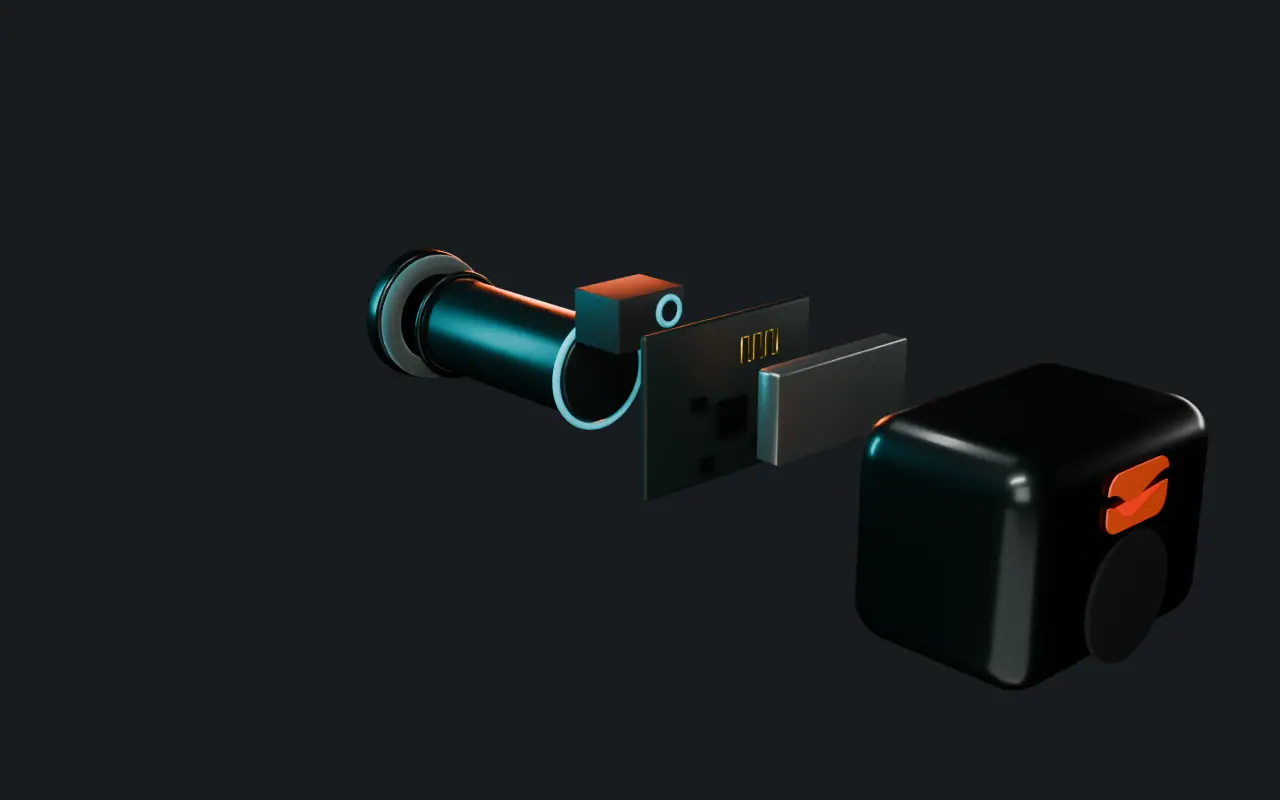
Measure your engine, not a model of it.
Your watch shows a VO₂max estimate. VenTracer is being built to measure it from your breath, along with the two thresholds that set your training zones, on your own bike, treadmill or track.1
In development · Pilot planned 2027 · Not for saleDesigned in India

Why your watch number isn’t enough.
Studies comparing watches with lab tests found individual errors of roughly ±10 ml/kg/min, with fitter athletes often underestimated. Read the evidence
Watch, lab cart and VenTracer, compared How a VO₂max test works
From safety check to zones, in about 30 minutes.
A planned ramp-test experience, not instructions for the current engineering build. Power climbs, your breathing follows, and the two thresholds split the ramp into easy, steady and hard.
- About 1 min
Safety check
A second person is with you, you know where STOP is, and the time limit is on screen before the mask goes on.
- About 5 min
Fit and seal check
The analyzer warms up for about 3 minutes. Put the mask on when the app says so. It takes a room-air reading. A seal check is planned.
- 2–3 min
Seated rest
Sit quietly for a baseline. Hold the mask by hand for the first 2 minutes. It is strapped on only if rest shows no alerts.
- 5–10 min
Warm up
Easy effort while your breathing settles.
Planned · not in the current build - 8–12 min
Ramp
Power or pace rises steadily until you can’t hold it.
Planned · not in the current build - 3–5 min
Cool-down
Easy spinning or walking, mask still on.
Planned · not in the current build - When you stop
Report
Take the mask off. Once the analyzer has stopped, your report opens with VO₂max, VT1, VT2 and your zones.
Timings are preliminary. The current engineering build records supervised room-air bench sessions only, with the analyzer off-face. Wearer and exercise testing are not enabled. STOP is always on screen.
Safety. Maximal testing is hard and carries a small risk, especially with heart, lung or other medical conditions. Complete a pre-exercise screening questionnaire first (for example, the ACSM guidelines). With symptoms or known heart, lung, metabolic or kidney disease, get medical clearance first; clinical patients should be tested under medical supervision. Stop if you feel chest pain, dizziness or unusual breathlessness.4
210 WVT2
312 W
5:05 /kmVT2
4:05 /km
148 bpmVT2
171 bpm
Train by your thresholds, not 220 minus your age.
VT1 is where breathing first picks up: below it you can still talk in full sentences. VT2 is where breathing turns ragged and hard efforts stop being sustainable for long, close to what many athletes call threshold. Together they split your effort into easy, steady and hard (the moderate, heavy and severe domains). Measured in your sport, they give you heart rate and power (bike) or pace (run) for each session, until your next retest.
Already use a 5- or 7-zone system? VT1 and VT2 are the two anchor points: put your own zone boundaries around them.
Racing runs and stations? Read VO₂max and thresholds for HYROX-style racing. Want a measured test now? See VO₂max testing in India.
Ventilatory thresholds, explainedSee whether the block worked.
Retest on the same protocol after 6 to 12 weeks of training, or at the end of a training block, and compare like with like. The app is being designed to flag changes too small to be sure they are real.
What a test gives you
VO₂max (your aerobic ceiling) · VT1 and VT2 (your zone boundaries) · RER (CO₂ out ÷ O₂ in) · V̇E (how hard you’re breathing)
- VT1first threshold
- Where breathing first picks up. Below it you can still talk in full sentences: easy, all-day effort.
- VT2second threshold
- Where breathing turns ragged and hard efforts stop being sustainable for long. Close to what many athletes call threshold.
- RERratio
- CO₂ breathed out ÷ O₂ taken in. At steady, easy effort, near 0.7 means mostly fat and near 1.0 mostly carbohydrate. Above 1.0 on a hard ramp it reflects extra CO₂ from buffering and faster breathing, not fuel.
- V̇EL/min
- Minute ventilation: the litres of air you breathe each minute.
Built for athletes who test, then train.
Cyclists, runners, triathletes.
Ramp tests on your own trainer or treadmill, with thresholds in watts or pace.
Rowing, skiing, team sports.
Stepped efforts in the sport you actually play. Swimming is not supported.
Your whole squad.
Test every athlete with one unit and keep their tests and zones in one place.
See the coach workspaceFitness, test after test.
Follow your measured VO₂max over the years, on a fixed protocol and a named firmware version.
Is it hard to breathe through?
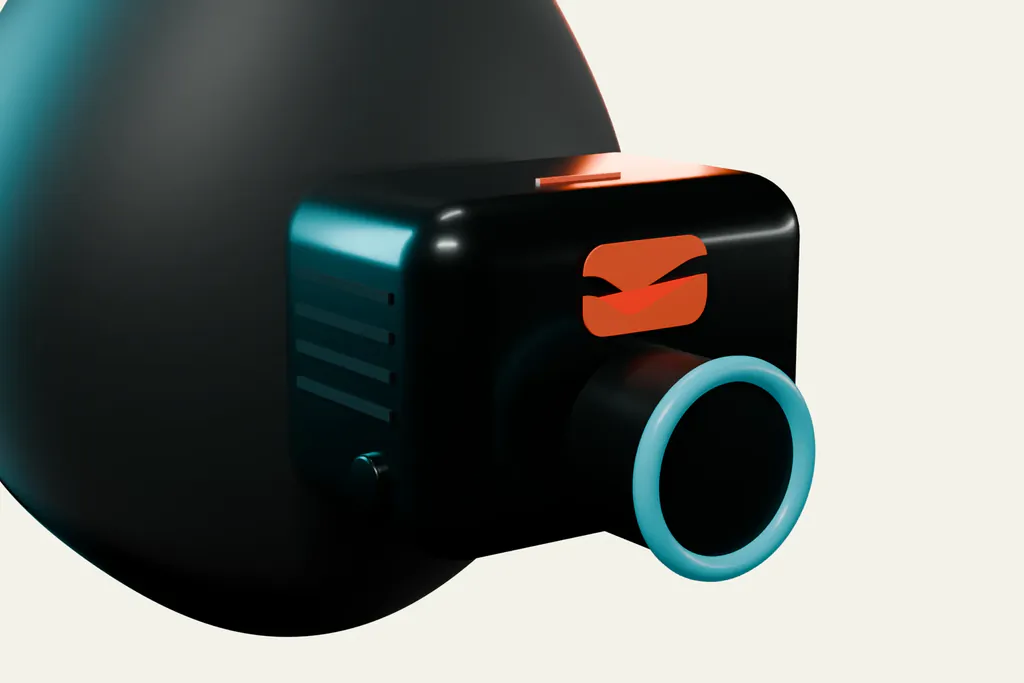
The flow tube is open and designed for low resistance. Resistance and dead-space figures will be published with the specifications.
Will it stay on when I run?
A five-point harness is designed to hold the seal from warm-up to sprint. Fit will be tested on engineering prototypes before anyone else wears one.
Can athletes share one unit?
Parts that touch breath are being designed to come off for cleaning between users. Cleaning instructions will be supplied with pilot units.
How hot is it on an indoor trainer?
We’ll report how the mask feels in long indoor sessions once prototypes are tested on athletes. Use a fan, as you would for any hard indoor test.
Do I need a heart-rate strap?
Yes, for heart-rate zones. The analyzer is not designed to measure heart rate; it is planned to pair with a standard Bluetooth chest strap.
I’m very fit. Will it cover my maximal test?
Not with the first flow element. It is characterised to about 85–100 L/min of ventilation, and trained athletes often breathe 150–200 L/min at VO₂max. A high-flow element is in development and will be validated separately. Until then, the analyzer is designed to flag breaths above the characterised range, not report them silently.
Which sports?
Anything where you can wear a mask: cycling, running, rowing, skiing and team sports. Swimming is not supported.
Is maximal testing safe for me?
Maximal exercise testing is strenuous and carries a small risk, especially for people with heart, lung or other medical conditions. Use a pre-exercise screening questionnaire (for example, the ACSM pre-participation guidelines). Anyone with symptoms or known heart, lung, metabolic or kidney disease needs medical clearance first, and clinical patients should be tested under medical supervision. Stop the test if you feel chest pain, dizziness or unusual breathlessness.4
Labs first, then athletes.
Engineering prototypes are planned for 2027 and go to validation labs and clinics first. Waitlist members hear first when athlete units open. Pricing hasn’t been announced, and joining the waitlist costs nothing. Dates may change.
- Now · 2026
Concept and architecture
Design and sensing plan.
- 2027 · planned
Engineering prototypes
First units go to validation labs and clinics.
- 2027 · planned
Validation pilot
Side-by-side tests against lab carts, results published.
- After validation
Athlete units
Waitlist members hear first.
Be first to hear.
Join the waitlist and we’ll email you when athlete units open, and about nothing else.