Gas exchange, on the mask.
A compact gas and flow analyzer on a breath-through tube, held to a silicone mask by a five-point harness. Designed to be tested against the lab before it claims a number.1
In development · Pilot planned 2027 · Not for saleDesigned in India
Breath goes straight through.
Nothing hangs off your back and nothing tethers you to a cart. Every breath passes through the flow tube, so every breath can be counted.1
Open flow tube
Every inhale and exhale passes through it, measured on the way.
On-mask analyzer
Gas, flow and computing planned in one enclosed body above the tube.
Five-point harness
Designed to hold a gas-tight seal from a warm-up jog to a maximal sprint.
What is a wireless VO2max mask?
A wireless VO₂max mask is a face mask with a breath analyzer on it that measures airflow, oxygen and carbon dioxide on every breath and sends the results to a phone or tablet, with no hose to a laboratory cart. VenTracer is one in development; it is designed to measure breathing, not restrict it, unlike an altitude-training mask.1
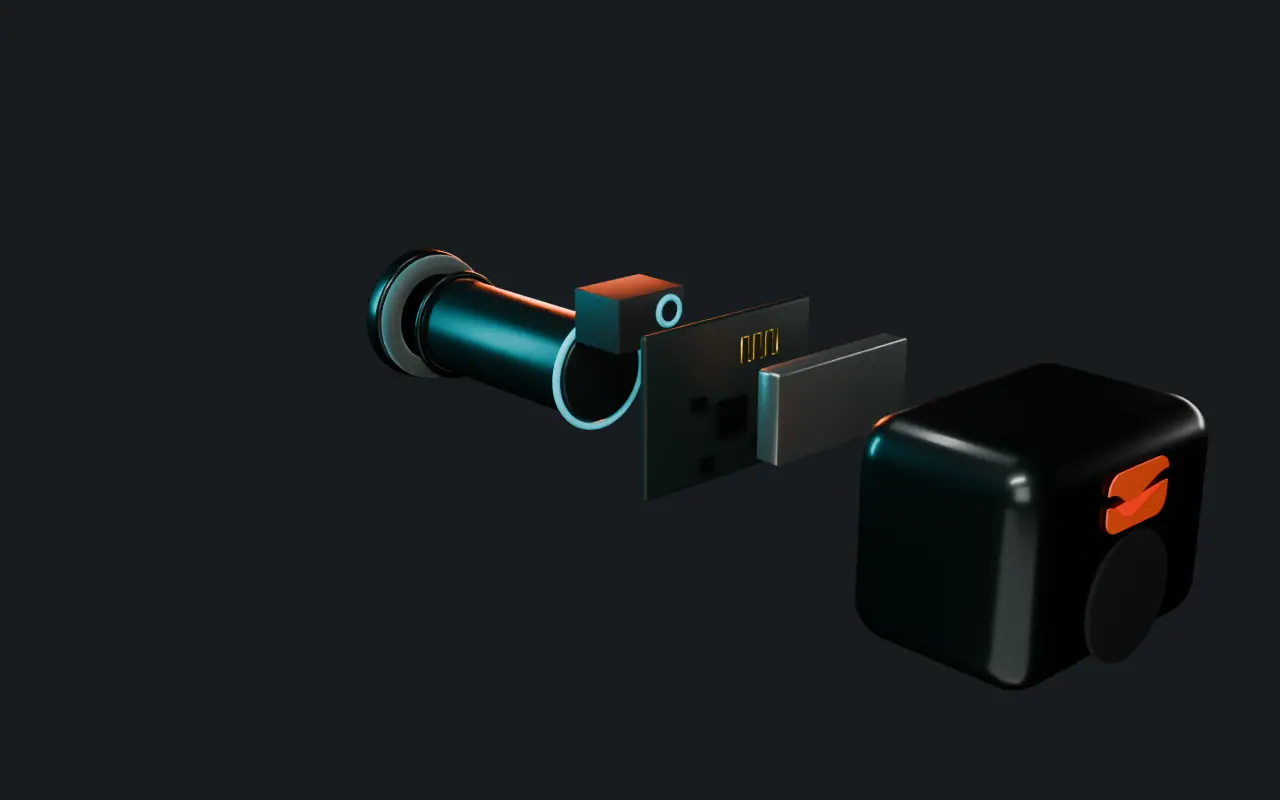
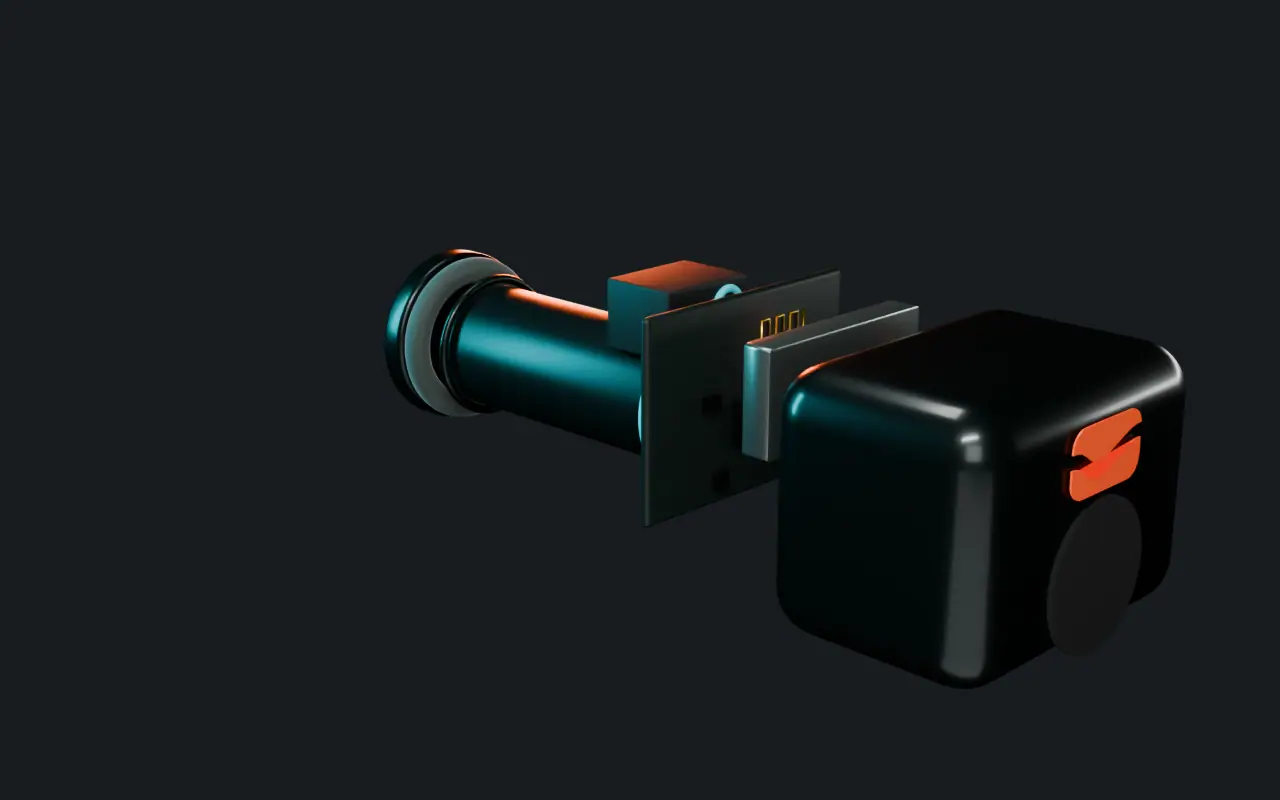
Six parts, one system.
- 01 / 06Port lockDesigned to lock the analyzer to the mask with a quarter turn and keep the joint gas-tight.
- 02 / 06Breath flow sensorA low-resistance tube designed to measure every inhale and exhale.
- 03 / 06Dual-gas breath coreDesigned to read oxygen and carbon dioxide on every breath.
- 04 / 06Compute and wirelessPlanned: turns gas and flow into VO₂ and streams it live.
- 05 / 06Rechargeable power cellBattery protection planned; details with the specifications.
- 06 / 06Front housingProtects the stack and carries the breathing port.
All parts
- Port lock: Designed to lock the analyzer to the mask with a quarter turn and keep the joint gas-tight.
- Breath flow sensor: A low-resistance tube designed to measure every inhale and exhale.
- Dual-gas breath core: Designed to read oxygen and carbon dioxide on every breath.
- Compute and wireless: Planned: turns gas and flow into VO₂ and streams it live.
- Rechargeable power cell: Battery protection planned; details with the specifications.
- Front housing: Protects the stack and carries the breathing port.
Scroll to take it apart. Design concept; parts may change.
Designed to measure, not model.
What the analyzer is being designed to do on every test, and where its limits are today.
Methods Known limitations How VO₂max is computed from breath
01 Both gases, every breath
Oxygen and carbon dioxide are designed to be read on every breath, on the mask, so VO₂, VCO₂ and RER are calculated breath by breath rather than in a mixing chamber. Accurate VO₂ needs both gases: CO₂ is required for the Haldane correction, not only for RER.
02 Every inhale and exhale counted
A low-resistance bidirectional flow tube is designed to measure each breath in both directions, giving ventilation, breathing rate and tidal volume. The current flow element is characterised to about 85–100 L/min of ventilation; a high-flow element for maximal tests in trained athletes is in development.
03 Corrected on every breath
Pressure, temperature and humidity are measured and used to correct the readings to the standard conditions physiologists expect: BTPS for ventilation, STPD for oxygen and CO₂ volumes. Each gas sensor’s response lag is corrected before use, and gas is aligned to expired volume, not clock time.
04 Thresholds from gas exchange
VT1 is proposed by the V-slope method and confirmed or moved by the tester; VT2 is detected automatically and can be overridden. Both picks are stored. Planned methods, to be published with validation.3
05 Checks before every test
A guided fit-and-seal check and a room-air reference are planned before each test, with a leak check on every breath, because a breath analyzer is only as good as its seal.
06 Raw data, always exportable
A breath table and the raw sensor signals, planned to be exportable to you, your coach or your lab.
What it’s built to report.
All derived from breath gas exchange. Heart rate comes from a paired chest strap. Values shown are example data, not readings from a VenTracer unit.2
See the app
VO₂max
Your aerobic ceiling. Labelled VO₂peak when the test shows no plateau.
VT1 and VT2
The two ventilatory thresholds that set your training zones: heart rate with power on the bike, or with pace on the run.
RER
CO₂ out divided by O₂ in. A fat and carbohydrate estimate needs its own steady-state test, with stages below VT1; it is not calculated from a ramp.
Ventilation (V̇E)
How much air you move each minute, with breathing rate and tidal volume.
Energy expenditure
From a separate steady-state test, not the ramp: VO₂ and VCO₂ through the Weir equation.
Every breath, on the record.
Each breath stored and exportable for review. The record, not a sixth result.
The specifications, so far.
Values marked preliminary will be confirmed on engineering prototypes. No accuracy figures are published until validation is complete.3
Measurement
- Gases
- Oxygen and carbon dioxide
- Sampling
- Breath by breath; averaging chosen in the appPreliminary
- Flow
- Bidirectional flow tube, every inhale and exhale
- Flow range
- Current flow element characterised to about 85–100 L/min V̇E (submaximal and moderate-fitness maximal tests). A high-flow element for maximal tests in trained athletes is in development and will be validated separately.Preliminary
- Gas response time
- 10–90% response time to be measured on prototypes and published, with the lag-correction time constant for each sensor.Preliminary
- Compensation
- Pressure, temperature and humidity
Fit and inputs
- Mask
- Soft silicone oronasal maskPreliminary
- Sizes
- Multiple mask sizesPreliminary
- Harness
- Five-point head harness
- Heart rate
- From a paired Bluetooth chest strap (planned)Preliminary
- Workload
- From a Bluetooth smart trainer or power meter, or entered treadmill speed and grade (planned). Heart rate and workload time-stamped on the same clock as breaths.Preliminary
Electronics and checks
- Processing
- On the device, breath by breath (planned)Preliminary
- Wireless
- Bluetooth LEPreliminary
- Power
- Rechargeable; runtime to be confirmedPreliminary
- Checks
- Every test: room-air reference and a zero-flow check of the flow sensor with the mask held still. Seal check: planned. After a fault the analyzer needs a 2-minute cool-down before the next test. Daily, or when a flow element changes: 3-litre syringe check. Periodically: reference-gas check. Syringe and reference-gas checks are planned, not in the current build. All logged (planned).Preliminary
Data and status
- App
- VenTracer app for phone and tabletPreliminary
- Export
- Breath table and raw sensor signalsPreliminary
- Stage
- Design concept; prototypes planned for 2027
- Use
- Fitness and performance; not a medical device4
Meet VenTracer.
A breath, the design, six parts, the numbers. Renders of a design concept; on-screen values are example data.
Designed to be worn hard and cleaned often.
A breath analyzer is only as good as its seal.
Soft silicone, several sizes.
A flexible lip designed to seal on the face, not just the nose bridge. Sizes will be confirmed in fit testing.
Five points of contact.
Crown, temple and neck straps are designed to spread the load so the seal holds at high ventilation.
A tube for every effort.
The first flow element is characterised to about 85–100 L/min of ventilation: enough for warm-ups and threshold work, but not for most maximal tests. A high-flow element for athletes who breathe 150–200 L/min at VO₂max is in development. Until it is validated, VenTracer is designed to flag any breath above the characterised range rather than report it silently.
Twist on, twist off.
The analyzer is designed to lock to the mask with a quarter turn. No tools and no hose joints to leak.
Designed to come apart for cleaning.
Parts that touch breath are being designed to come off for cleaning between users. Cleaning instructions will be supplied with pilot units.
One light, one button.
A single light is planned to show power, link and warm-up. Everything else lives in the app.
Want an early unit on your bench?
Labs and clinics in the pilot are planned to get engineering units first, in exchange for side-by-side testing against their reference system.